QD Mini LED capabilities and conditional METZ fit for films, sport and gaming
2026-10-26
Share:
For films, prioritise convincing dark scenes; for sport, readable movement across regular seats; for gaming, confirmed source compatibility and suitable input response. METZ 55MNH7000Z, 60MNH7000Z and 65MNH7000Z provide documented configuration and size choices for those setups. The useful conclusion is conditional: retain an installable model when its known connections and platform fit, then confirm the performance requirement that matters to your activity.
1. Separate a setup match from a performance requirement
A television can satisfy a device plan without establishing the picture quality that makes a film enjoyable. Start with two lists. The first contains facts you can already match, such as cabinet width, operating system and connection count. The second contains outcomes you must still establish, such as unobtrusive subtitles, readable fast movement or suitable response in your intended game mode.
This separation makes the METZ shortlist actionable. All three models document QD-MiniLED, 3840 x 2160, Google TV and WiFi-WLAN/LAN. That is a relevant configuration for a household seeking this display category with connected services. Confirm essential services in Italy and your network route. Then select the physically workable size rather than assigning one diagonal to movies and another to sport.
Known fit and purchase conditions by scenario
Use
Known METZ starting fit
Essential remaining condition
Films
QD-MiniLED, 3840 x 2160 and Google TV; select an installable size
Required playback service and acceptable dark-scene/subtitle presentation
Sport
Documented network routes and three HDMI inputs for a planned source
Familiar broadcast remains readable in motion from regular seats
Gaming
Three HDMI inputs; ARC on HDMI1; CEC on all three
Exact-device output compatibility and suitable input response
Mixed use
Shared configuration with three physical size choices
Every essential activity meets its minimum acceptable outcome
2. Film-first conclusion: a streaming candidate, conditional on the picture
Keep any of the three METZ models on a film-first shortlist if you want the documented display category and resolution, its complete installation fits and your required playback route is confirmed. Google TV is a practical starting match for television-based services, not proof that a particular Italian app or subscription works as intended. Use the exact service and programme quality you plan to watch.
The performance condition is convincing bright-dark presentation in your normal evening light. Watch faces, textured shadows and subtitles together. Backlit LCD local dimming can improve contrast while producing light around small bright objects; its success depends on implementation. TFTCentral explains that mechanism and OLED's different pixel-level control. This supports the comparison task, not a METZ dark-scene result. [S2]
For HDR-led film use, require evidence that highlights and shadows remain useful together on the chosen size. A format label would not by itself establish that outcome: VESA's performance criteria separate luminance, black level, colour accuracy and subtitle behaviour into distinct checks. [S3] If dark-scene quality is decisive and relevant evidence is unavailable, defer the performance-led purchase rather than treating the configuration match as the answer.
3. Sport-first conclusion: choose the source plan, then check the match
Retain the installable METZ size for a sports setup when the planned external source fits the connection count, or when the intended streaming service is confirmed. Wired LAN and WiFi-WLAN provide two documented network routes to consider; neither guarantees an uninterrupted home broadcast. Check the actual service before a major match, including account access and the picture quality your connection can sustain.
The remaining sporting condition is readable movement with a fair view for the group. Use a sustained familiar broadcast containing camera pans, a small moving ball and fixed score graphics. A pitch can also expose distracting uneven-looking areas. Keep source quality consistent and compare available motion settings, noting artefacts as well as apparent smoothness. A clean demonstration clip cannot substitute for the feed you normally watch.
Do not assign 55MNH7000Z, 60MNH7000Z or 65MNH7000Z a sports grade from its diagonal. Choose the size through installation and preferred image scale, then assess motion, surface visibility and the least central regular seat on that exact candidate. Pixel response contributes to movement but is not the whole motion experience, as TFTCentral's explanation makes clear. [S2] This is a conditional setup conclusion, not verified METZ sports performance.
4. Gaming conclusion: connections fit only part of the requirement
A METZ model is a conditional gaming candidate when its dimensions fit and its documented three-input HDMI layout accommodates the devices you need. With compatible ARC audio using HDMI1, two HDMI inputs remain for video sources. A console plus another player fits that count; three directly connected video sources plus ARC audio need a different connection plan. CEC is listed for all three inputs, but check how your particular devices cooperate.
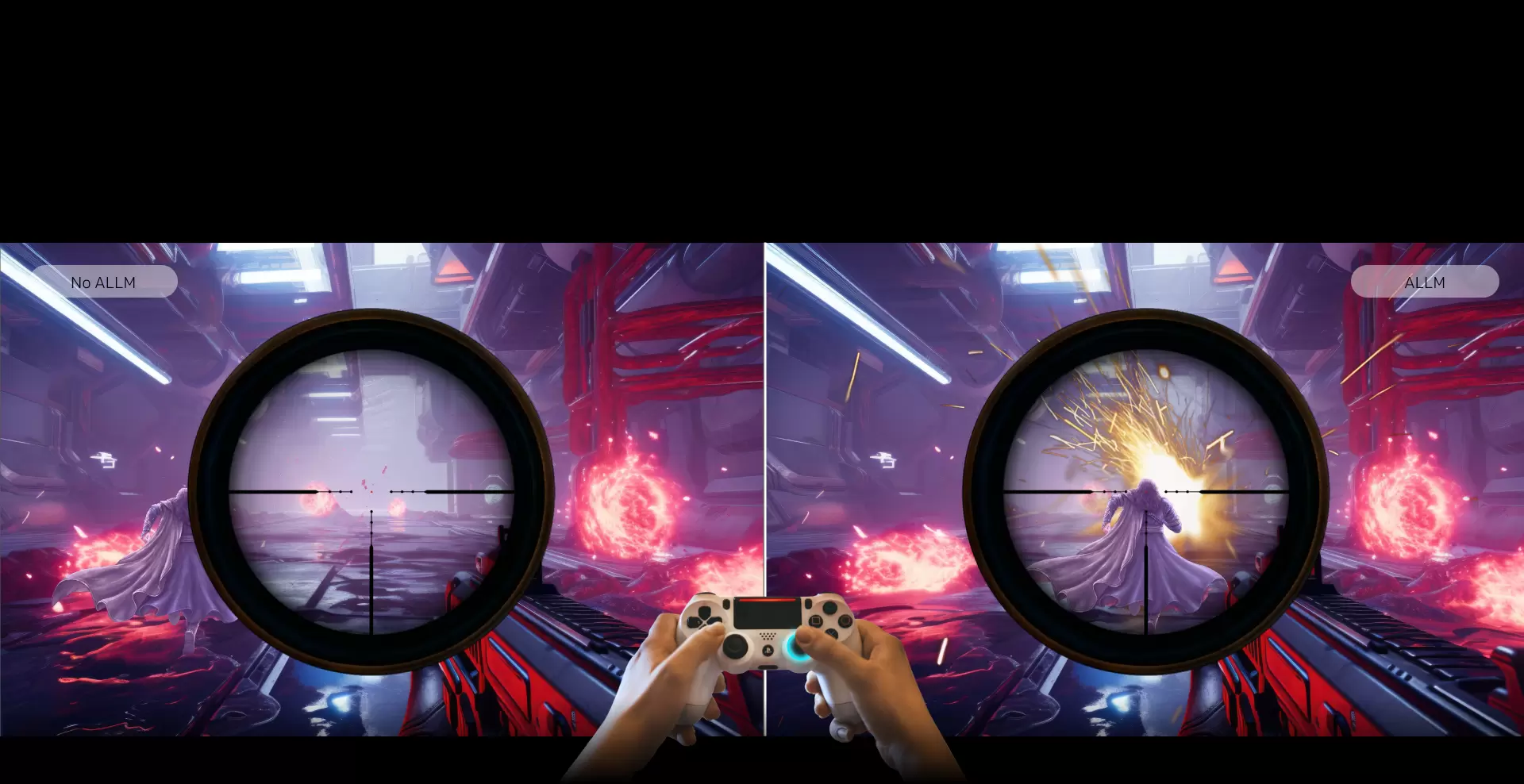
Before treating that setup as suitable for play, identify the console or computer and intended output mode. Obtain exact-model confirmation for essential signal compatibility and relevant input-response evidence. Timing-sensitive competitive play places more weight on latency than an occasional slow story game. If a required feature remains uncertain, pause the gaming-led recommendation; a connector count cannot answer how the television behaves in that mode.
Keep pixel response separate from input latency. OLED's fast pixel transitions are a genuine strength explained by TFTCentral, but the speed of changing pixel states is not a controller-to-screen latency measurement. [S2] Equally, an enjoyable personal play session does not create a numerical test result. Judge the intended mode and device combination rather than borrowing a favourable result from a different television or screen size.
5. Daylight condition: assess visibility where you will watch
For daytime sport or television, compare both a bright scene and a dark conversation under representative light. A window reflection may obscure dark details even when a bright landscape looks impressive. Screen surface, seat position and lamp direction influence the result independently of resolution. Moving a lamp or adding shading can be a useful part of the planned installation, not an excuse to ignore an unresolved visibility problem.
Backlit LCD designs offer brightness capability, but that does not rank every QD Mini LED above every OLED. Compare small highlights and sustained bright scenes separately; VESA also distinguishes these conditions in its performance framework. [S3] For the METZ shortlist, daylight visibility remains an exact-model question. Retain a configuration match only if you can resolve any daytime condition essential to your household.
6. Pick the physical model and protect mixed-use essentials
Use cabinet width to select the METZ model for further checking: 55MNH7000Z is 122.6 cm wide, 60MNH7000Z is 134.5 cm and 65MNH7000Z is 144.5 cm. Their base footprints are 85.7 x 26.4, 116.9 x 29.9 and 131.5 x 29.9 cm respectively. Check support and clearances separately. These differences create real installation roles without inventing film, sport or game performance tiers.
For a household mixing evening drama, weekend matches and occasional games, define a minimum acceptable result for each activity. Frequency matters, but an occasional player can still have a strict compatibility requirement. Decide whether changing picture settings is realistic for everyone. Prefer a compromise that clears each essential condition over an impressive specialist demonstration that conceals a daily failure. Compare current total setup quotations only after those requirements and the installation are viable.
7. Sources and evidence boundaries
METZ facts here are limited to the checked supplied configuration and installation records. [S1] External sources explain general mechanisms and evaluation criteria, not tests of these models. TFTCentral's historical examples and numerical product claims are not transferred to METZ; VESA criteria do not imply certification. [S2][S3] No hands-on HDR, motion or latency result, current price or warranty promise is asserted. Missing performance evidence is not evidence that a feature is absent. The next step is the specific check attached to your scenario, not a longer generic feature list.
Frequently asked questions
Which METZ model is the film choice?
Any installable size can remain a conditional film candidate when its documented configuration and confirmed playback route match your needs. Choose the size through room fit, then require acceptable dark-scene and subtitle behaviour. No size earns a film-performance grade from the shared label.
What is the direct sports conclusion?
Keep the physically suitable model when its planned source and connections fit. Before a sports-led purchase, check a familiar sustained broadcast from regular seats, including daylight visibility. Resolution and input count do not establish motion clarity or a fair side-seat picture.
When is a METZ gaming shortlist justified?
When the installation and documented device count fit, it is a configuration shortlist. A gaming-led purchase additionally needs intended-source compatibility and suitable input-response evidence. ARC audio on HDMI1 leaves two source inputs; it says nothing by itself about latency or signal modes.
How should a mixed household decide?
Name the minimum acceptable outcome for every essential use, then prioritise frequent activities and strict compatibility requirements. Select an installable size and resolve its remaining checks. Do not let one attractive demonstration average away an activity that would fail in daily use.
Sources and scope
S1 · Supplied METZ datasheets and checked installation mapping (supplied documentation; no public web link)
Access recorded: 2026-10-15
Supports: Shared configuration, HDMI layout and per-size widths/base footprints
Scope: Local records: content/preflight/metz-supplied-material-recheck-20261012.json and content/preflight/metz-installation-preview-implementation-20261012.json; Specifications only; no film, sport or gaming performance test
Supports: LCD backlight-region control versus OLED pixel emission; Blooming mechanism and rapid OLED pixel transitions; Pixel speed alone does not determine complete motion clarity
Scope: Historical monitor-focused article with older product examples; Only durable mechanisms used; no historical numerical performance or lifespan claims transferred; Not a METZ model test; no artwork or competitor promotion reused
Supports: Separate small-patch, full-screen flash and sustained luminance tests; Separate black-level, colour accuracy, shadow and subtitle checks
Scope: A certification framework, not evidence the named METZ models are certified or meet a tier; No thresholds transferred into METZ specifications; Does not establish latency, services or room reflections
This website uses cookies to provide you with a safer and more personal experience. By accepting, you agree to the Cookie Policy and the use of cookies for advertising and analytics purposes.