Premium Mini LED TV: picture standards and three METZ candidates
2026-10-24
Share:
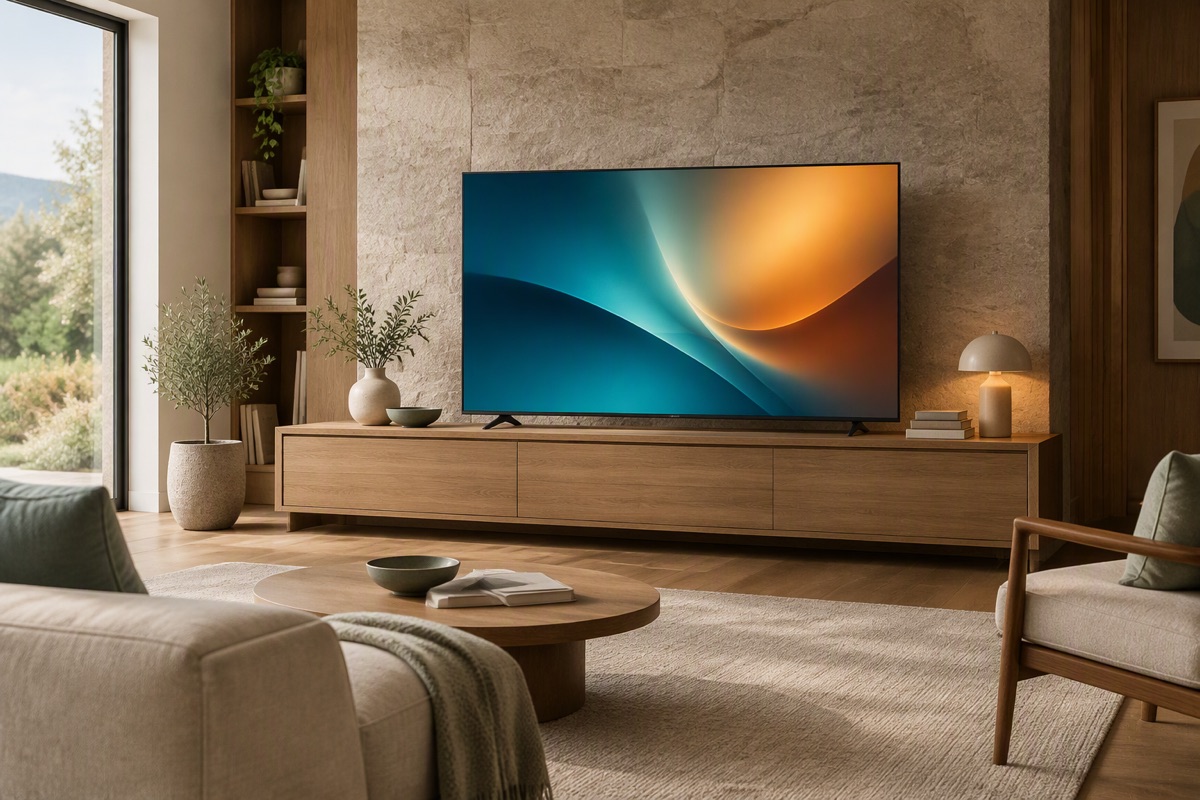
A premium Mini LED TV should preserve highlights, shadows, colour and movement together in the conditions you actually use. That is a performance standard, not a price tier or a certification supplied by a technology label. The METZ 55MNH7000Z, 60MNH7000Z and 65MNH7000Z are documented QD-MiniLED candidates. Their known configuration and different installation requirements provide concrete reasons to investigate a particular model, without establishing premium picture performance.
1. Define premium through complete scenes, not isolated specifications
Start with the programmes you want to improve. A subtitled film asks the display to keep text legible without burying dark clothing or distracting from the scene. A bright landscape asks for textured clouds rather than a blank white sky. A football broadcast asks for followable movement rather than a striking still frame. These are useful premium standards because an apparently impressive effect can otherwise hide a compromise elsewhere.
Choose two representative passages and identify what must remain visible. Use the same passages and comparable settings when assessing candidates. The aim is not to demand perfection in every frame; it is to discover whether the presentation remains convincing without constant repairs. This article addresses that standard of execution. Whether an improvement justifies paying extra is a different question, covered by the premium-value decision rather than settled here.
2. Ask HDR to preserve detail as well as intensity
HDR signal compatibility and HDR presentation answer different questions. A format entry identifies part of the signal path. The picture still depends on how the television maps that signal into its available output. Examine a lamp, a bright reflection and a face in the same scene: intensity is useful when it preserves relevant texture and leaves the rest of the image balanced.
A brightness figure needs a picture mode, illuminated area and duration to be informative. A brief small highlight does not describe a sustained bright landscape. For an observation, watch both kinds of material rather than selecting whichever favours the candidate. Record clipping, unexpected dimming or changing exposure as questions for the exact version, not as findings about the METZ models discussed here.
For someone replacing a picture that washes out clouds, the deciding evidence is retained cloud gradation alongside sensible mid-tones. Adding more logos to a shortlist does not answer that problem. Keep the assessment focused enough that you can explain what improved and what, if anything, became worse.
3. Evaluate backlight balance and colour separately
Mini LED describes small backlight emitters within an LCD design. Where local dimming is implemented, groups of illumination respond to the picture rather than controlling every image pixel independently. Check subtitle transitions and small bright objects against dark backgrounds. The desirable balance retains shadow information and highlights while keeping surrounding glow acceptable. A darker background obtained by hiding story-relevant detail is not an unqualified improvement.
Quantum dots have a different job. The Nobel Prize explanation describes blue light exciting dots that produce red and green light in QLED displays [S1]. RP Photonics likewise explains down-conversion through a quantum-dot film [S3]. Those mechanisms explain why QD is relevant to colour; they do not demonstrate accurate skin tones, a measured gamut or superior dimming in any METZ model.
Use neutral faces, coloured fabric and a gradual sky to distinguish fidelity from exaggeration. A richly coloured object should retain texture, while restrained material should remain restrained. Assessing these examples alongside the dark scene prevents vividness from becoming a substitute for overall picture quality.
4. Turn the standard into a decision table
The table links a real viewing problem to the evidence that can change a decision. Apply only the rows important to your household. A weak result on a daily requirement should not disappear inside an overall average, but an optional unresolved feature need not stop an otherwise suitable investigation.
Premium-picture checks with practical consequences
Your problem
Evidence to examine
Reason to prefer a candidate
Do not substitute
Clouds lose texture
Bright and mixed scenes in an identified mode
Highlight gradation without disturbing faces
HDR format names alone
Subtitles distract at night
Text transitions, nearby shadows and small highlights
Acceptable glow with retained information
A single black frame or assumed zone count
Faces look exaggerated
Neutrals, skin and saturated texture
Controlled colour across different material
QD treated as an accuracy result
Movement is tiring
Normal sources with processing reduced and enabled
Acceptable clarity and cadence in retained settings
Interpolation treated as native refresh
Side seats or windows spoil viewing
Regular seats in realistic light
A usable household viewing envelope
A central dark-room demonstration
5. Include movement, ordinary sources and regular seats
Motion interpolation estimates intermediate frames; native refresh describes panel updating. Smoothing can help one kind of movement while adding distortions or changing film cadence. Compare settings you would actually keep. Include an ordinary broadcast or compressed programme, because strong sharpening and noise reduction can create outlines or erase texture that a pristine demonstration never exposes.
Move to the household's regular side seats and introduce realistic lighting. A reflected window can cover faces even when a dark-room image looks convincing. OSHA's display-environment guidance explains how light sources and reflected glare impede screen visibility [S2]. That supports checking placement and light control, not a television-specific brightness threshold or a health claim for METZ.
If gaming is essential, assess the relevant operating mode rather than transferring a film-mode judgement. If it is not essential, do not let a long gaming checklist displace your main film or broadcast requirement. A premium conclusion should name its usable conditions rather than imply every mode behaves identically.
6. Select a METZ candidate for a verifiable reason
If you want QD-MiniLED, 3840 x 2160, Google TV and a wired network route, all three documented models merit consideration: each lists those features and WLAN/LAN [S4]. A household with compatible ARC audio and two external sources also has a concrete layout to assess: three HDMI inputs, CEC for three, ARC on HDMI1 and two USB connections [S4]. This is a system-planning reason, not a picture endorsement.
Start with 55MNH7000Z when keeping the support footprint smaller matters: its base is 85.7 x 26.4 cm and overall width is 122.6 cm. Consider 60MNH7000Z when you want the documented 60-inch diagonal and can accommodate its 116.9 x 29.9 cm base and 134.5 cm width. Choose 65MNH7000Z for investigation when the larger documented diagonal is the objective and its 131.5 x 29.9 cm base and 144.5 cm width are acceptable [S4].
These are conditional candidate recommendations linked to known differences. They do not rank brightness, motion or colour by diagonal. Once the physical and system requirements are satisfied, apply the same picture standard to the exact size you intend to buy. Specific Italian apps and the local version belong in that final check.
7. Source boundary and the resulting conclusion
The METZ facts here come from the checked configuration and installation records [S4], which are manufacturer-stated specifications rather than independent tests. Supplied material also contains performance entries, with unresolved refresh, brightness and HDR-list differences; this article neither resolves them nor interprets omissions as non-support. External sources explain only the cited mechanisms and lighting principles. No measured METZ premium status, current price, warranty or market-wide winner is established. A model can therefore be a well-matched candidate while its premium-picture claim remains open.
Frequently asked questions
Does premium mean expensive?
Not in this guide. It means convincing picture execution across the important scenes, modes and seats. Whether the improvement deserves extra spending is a separate value judgement requiring real alternatives and offers.
Which METZ model should enter my premium-picture shortlist first?
Investigate 55MNH7000Z for a smaller support footprint, 60MNH7000Z for the intermediate diagonal with suitable support, or 65MNH7000Z when a larger diagonal is wanted and fits. Those reasons establish candidate relevance, not premium performance.
Does QD guarantee accurate colour?
No. Quantum dots explain a colour-conversion mechanism. Accuracy, gradients and retained texture depend on the completed display and settings, so they need their own evidence.
Can a premium picture still show some blooming?
Yes, a bounded quality judgement can accept a visible compromise. Evaluate its distraction alongside retained highlights and shadows, and state the conditions rather than suggesting every trade-off has disappeared.
Sources and scope
S4 · Supplied METZ datasheets: checked configuration and installation records (supplied documentation; no public web link)
Access recorded: 2026-10-15
Supports: Shared QD-MiniLED, 3840 x 2160, Google TV, WLAN/LAN and documented HDMI/CEC/ARC/USB layout; 55/60/65-inch diagonals and per-model dimensions, base footprints, weights and VESA
Scope: Local records: content/preflight/metz-supplied-material-recheck-20261012.json; content/preflight/metz-installation-preview-implementation-20261012.json; Datasheet locators: 55MNH7000Z pages 1/3; 60MNH7000Z pages 1/2; 65MNH7000Z pages 1/3. Manufacturer statements, not independent tests or complete installation approval.; Installation additions approved for editorial previews only, not publication. Refresh, brightness and HDR-list conflicts remain unresolved; no performance ranking supported.
This website uses cookies to provide you with a safer and more personal experience. By accepting, you agree to the Cookie Policy and the use of cookies for advertising and analytics purposes.